
Unlocking Emotion with Projective Techniques in Surveys
Standard surveys have a tough time capturing the real feelings behind people’s answers. When people are asked direct questions — especially in a structured, traditional format — they tend to give surface-level responses. That’s where inca’s projective techniques come in.
Instead of relying only on direct questions, qualitative projectives invite participants to express emotions and deeper associations in more creative, symbolic ways. For example, a projective exercise might ask someone to choose a character that represents how they feel about the coming year and then explain why. It sounds simple, but these prompts unlock emotional detail, nuance, and context that traditional formats rarely reach.
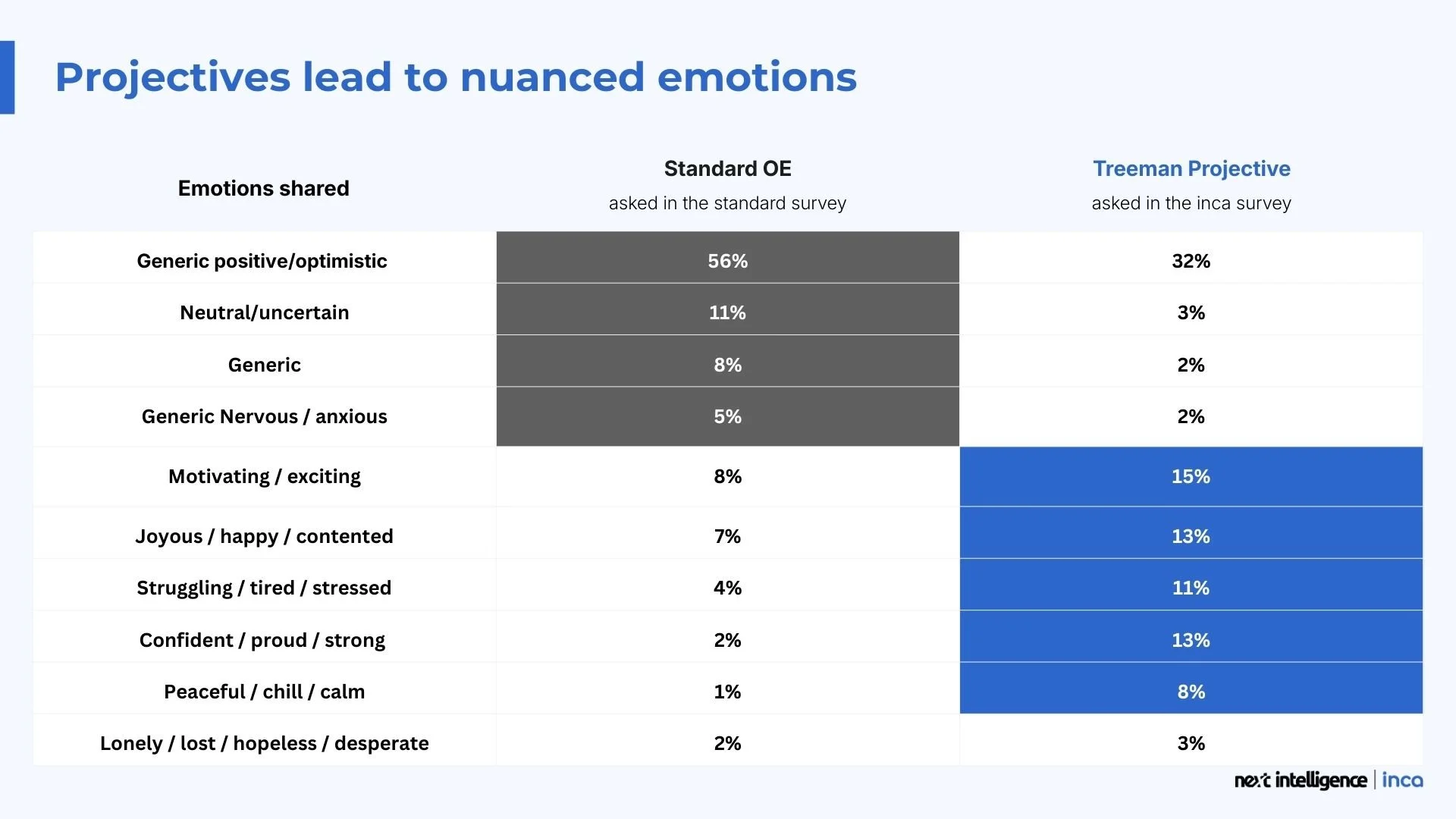
And when these exercises are delivered through a conversational survey, something powerful happens: people open up more naturally. The interaction feels less like a form and more like guided reflection — comfortable, intuitive, and human.
Why Projective Techniques Reveal More Than Direct Questions
The strength of projective techniques lies in their ability to bypass surface-level answers. Instead of asking people to explain their feelings directly, projectives let them express deeper thoughts through metaphor, imagery, or symbolic choices.
This shift helps uncover deeper qualitative insights such as:
emotional motivators behind preferences
anxieties or tensions that shape decisions
subconscious associations with brands or categories
aspirations or values that influence future behaviour
These emotional drivers often stay hidden in traditional question formats.
Turning Emotion Into Actionable Insight
Projective techniques produce expressive, layered responses, but the impact grows even stronger when analyzed effectively. With inca’s open-ended response analysis tool, inca AI Coding, teams can quickly interpret the emotion, meaning, and symbolism behind participant stories.
Pairing projectives with a conversational experience and supporting them with strong analysis creates an insight pipeline that is deeper and more human than traditional open-ended questions alone.
Takeaway: To Understand People, Give Them New Ways to Express Themselves
If your goal is to move beyond surface-level answers and uncover how people truly feel at scale, projective techniques offer one of the most effective paths forward. And when they’re delivered through a conversational survey, participants feel more comfortable expressing themselves openly, leading to clearer emotional insight and more meaningful findings.
With a better participant experience and more deeper qualitative insights, surveys can now help brands understand not just what people say – but the emotions, motivations, and context behind it.