
Why Conversational Surveys Are the Future of Quantitative Research
Traditional surveys can often feel like ticking boxes – impersonal, repetitive, and a bit of a chore. This is one major reason behind survey fatigue, low survey engagement, and the growing question of why traditional surveys lack depth. After a few grids and rating scales, it starts to feel less like sharing your thoughts and more like doing homework.
That’s why we built inca, the survey platform that refuses to be boring.
With inca’s conversational survey agent, the whole experience shifts from “Ugh, another survey” to something that’s a natural back-and-forth. By making the participant experience feel more like a real conversation, inca turns dull interactions into something people enjoy – and that enjoyment translates directly into richer insights.
A More Human Experience
In our validation studies, participants consistently prefer the conversational survey format over traditional question survey formats. Many described inca as: “natural”, “intuitive”, “fun”, “like talking to a real person instead of filling out an exam paper”.
In fact, 66% stated that inca’s conversational survey agent “allowed me to express myself better than other surveys,” highlighting how comfortable participants feel sharing more detail in a conversational environment.
This human-centred approach is the core reason conversational surveys outperform traditional survey designs. When people enjoy the process, they provide richer detail, more thoughtful responses, and significantly fewer rushed answers.
An Experience Participants Prefer
Across countries and culture the large majority of participants are clear that they much prefer inca conversational surveys to traditional form based surveys.
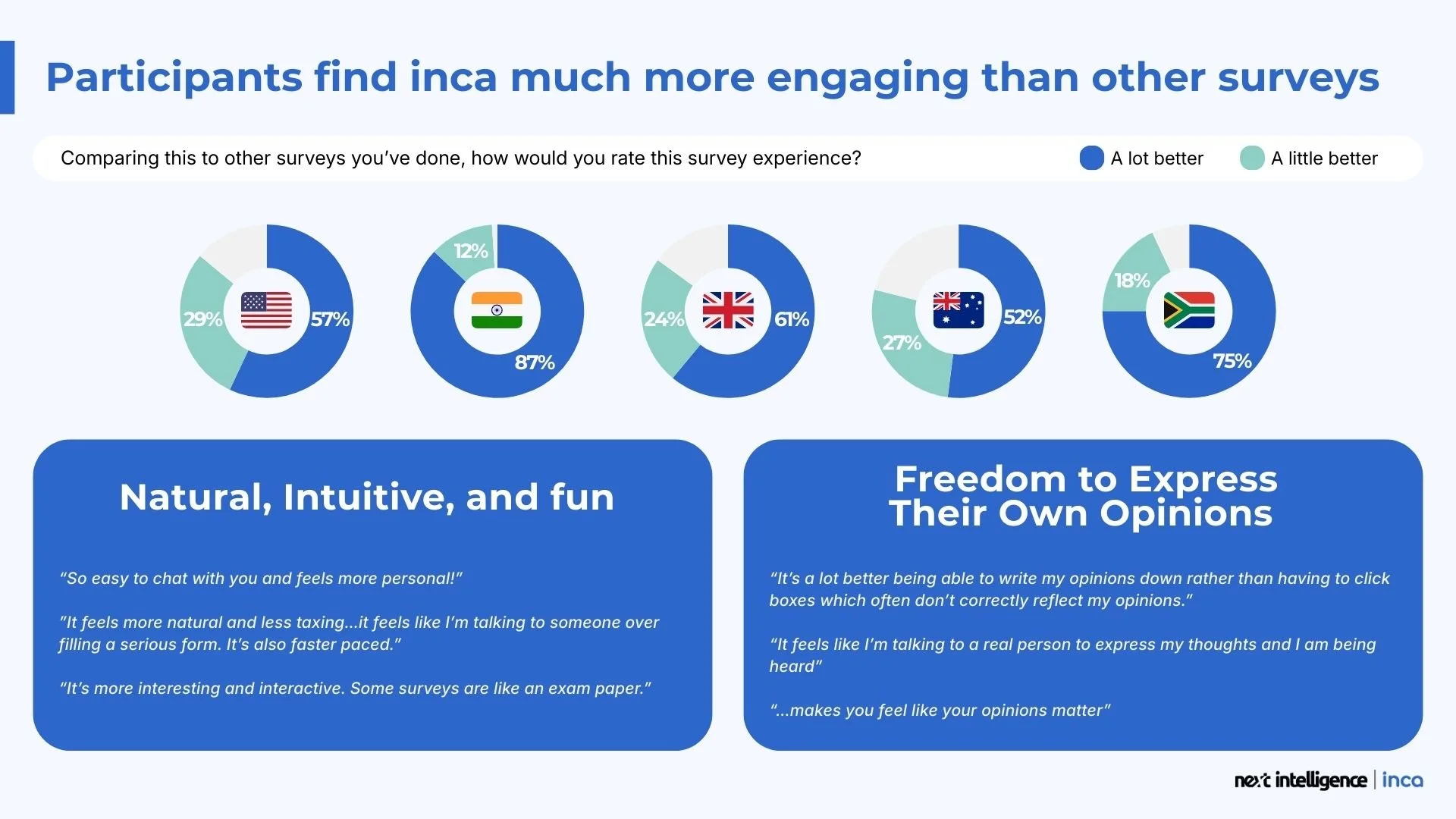
Two broad factors drive this preference:
The inca conversational survey format is more natural, intuitive and fun
inca’s AI-driven conversational survey agent, inca SmartProbe, which asks natural, context-aware follow-up questions based on each participant’s response, gives participants the freedom to express their opinions. Participants feel listened to and like their opinion matters.
It Feels Shorter – Even When It’s Not
One of the most compelling patterns we saw was how participants perceived the length of surveys:
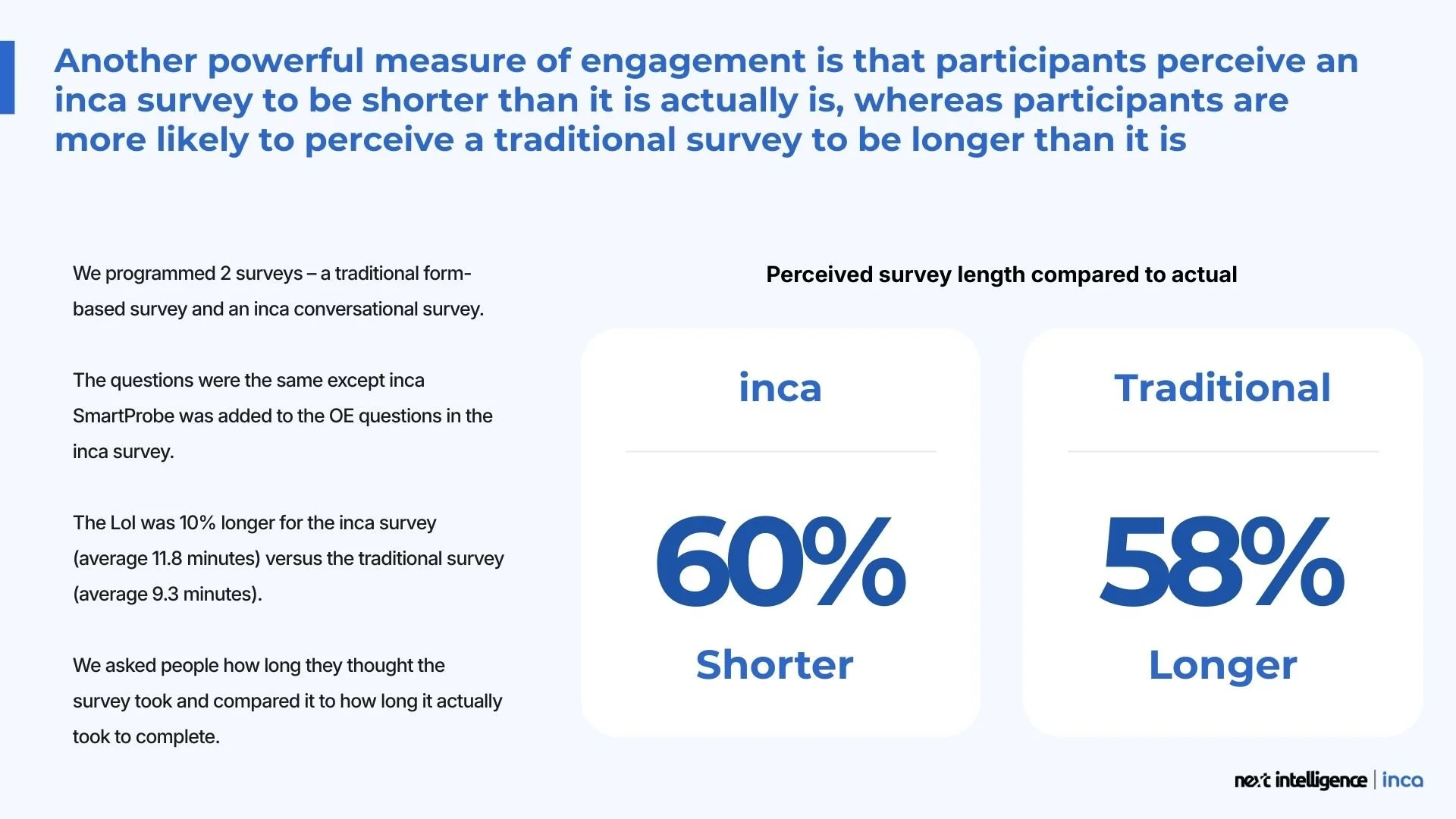
60% of participants using inca perceived the survey to be shorter than it actually was
58% of participants using a traditional survey perceived the survey to be longer than it actually was
A conversational experience lowers cognitive load for the participant. When the interaction feels easy, intuitive, and human, time passes more pleasantly and the participants stay engaged.
Works Across Audiences, Including the Hard to Recruit Ones
Perhaps most importantly, this approach works across a wide range of audiences – even B2B participants and people from diverse backgrounds prefer the inca experience over traditional survey platforms. Participants feel more comfortable explaining their thinking with inca, and researchers gain richer, more actionable insights.
For teams who rely heavily on deeper understanding, this shift unlocks new possibilities for a more modern, human-centred approach to quantitative research.
Takeaway: The Future is Conversational
Participants want to feel heard. Researchers want richer insights.
inca delivers both.
By pairing a more intuitive participant experience with capabilities like AI-driven, inca SmartProbe and adaptive question flows, inca creates a survey experience that is more human, more engaging, and far more insightful than traditional formats.
If you’re looking to enhance survey engagement, reduce drop-off, and capture deeper, more meaningful responses, conversational surveys aren’t just an upgrade – they’re the future of quantitative research.